Table of Contents
- Why Remote Legal Staff Is Reshaping Law Firms in 2026
- Types of Remote Legal Staff You Can Hire Today
- The Real Benefits of Remote Legal Staff for Your Practice
- Remote Legal Assistant Job Description: What to Expect
- Cost of Remote Legal Staff: Detailed Breakdown and ROI
- Security, Compliance, and Data Protection Considerations
- Integrating Remote Staff with Legal Software and Case Management Tools
- How to Manage Remote Legal Staff Effectively
- Common Mistakes Law Firms Make When Hiring Remote Legal Staff
- Conclusion
Last Updated: April 19, 2026
According to the American Bar Association 2024 Legal Profession Report, 82% of legal professionals now work remotely in some capacity, with 32% operating fully remote. Remote Legal Staff has shifted from a pandemic workaround to a core hiring strategy for competitive law firms. This guide from Bar Passed Attorneys -Remote Paralegals breaks down exactly how to hire, manage, and maximize remote legal talent in 2026. Below, we’ll show you the real cost numbers, the compliance considerations most firms overlook, and the software integrations that make remote teams function as well as in-house ones.
The numbers tell a different story than most firm partners expect. Firms clinging to traditional in-house staffing models are paying 40-70% more in labor costs than competitors who have adopted remote legal staffing, according to legal staffing industry benchmarks (2025). That gap compounds over time. The firms using remote legal staff most aggressively are also growing their headcount 25% faster and generating revenue four times as quickly as stable firms, based on data from the 2025 Clio Legal Trends Report.
Why Remote Legal Staff Is Reshaping Law Firms in 2026
The legal industry’s relationship with remote work has crossed a point of no return. According to the ABA Practice Forward Report 2025, 87% of lawyers now report their workplace allows remote work, including 89% in private practice. That’s not a trend anymore. That’s the baseline.
Remote Legal Staff is the practice of hiring paralegals, legal assistants, legal secretaries, and specialist roles who work outside the firm’s physical office, typically through virtual staffing arrangements, legal process outsourcing models, or direct remote employment. The operational implications are significant: firms can access talent across geographic markets, reduce overhead tied to office space, and scale support capacity without proportional cost increases.

What’s driving the urgency right now is the talent dynamic. According to the ABA Practice Forward Report (2025), 44% of lawyers with under 10 years of experience say they would leave their current job for one offering greater remote flexibility. Firms that don’t offer this are actively losing the next generation of legal talent to firms that do.
Here’s where it gets interesting: the shift isn’t just about cost or convenience. The Paragon Legal 2026 Survey of Legal Professionals found that 47% of in-office legal workers reported burnout, compared to 27% of remote workers, despite similar productivity levels. Remote legal staff aren’t just cheaper. They’re more sustainable.
Remote legal staffing is no longer an alternative model. It’s the dominant one. Firms that treat it as a temporary option are structurally disadvantaged against competitors who have built remote-first support teams.
Types of Remote Legal Staff You Can Hire Today
Most guides treat remote legal hiring as a single category. It isn’t. The type of remote legal staff you hire determines your ROI, your risk exposure, and your operational flexibility.
Remote Paralegal
A remote paralegal performs substantive legal work under attorney supervision, including legal research, document drafting, case management, and client communication. Remote paralegals are the most common hire for firms scaling their capacity without adding associate-level costs.
According to the U.S. Bureau of Labor Statistics Occupational Outlook Handbook, the median annual wage for paralegals and legal assistants was $60,970 in May 2023, with the top 10% earning more than $98,830. The BLS also projects 39,300 paralegal job openings annually through 2034, driven largely by turnover, which means consistent demand for qualified remote talent.
Bar Passed Attorneys -Remote Paralegals operates in a distinct tier here: the firm exclusively provides bar-passed attorneys working as dedicated virtual paralegals. This means the remote paralegal assigned to your firm thinks and operates with full legal acumen, not just paralegal training. For complex litigation support, contract review, or substantive legal drafting, that distinction matters.
Remote Legal Assistant
A remote legal assistant handles administrative and procedural tasks: scheduling, client intake, correspondence, billing support, and document organization. The role sits below paralegal in terms of legal complexity but is critical for keeping a firm’s operations running without attorney involvement.
The Law Office of Felicia Blow documented saving 50% on legal staffing costs after hiring a remote legal assistant who could handle both administrative and drafting work at a high level. That kind of dual-function hire is the sweet spot for solo practitioners and small firms.
Legal Virtual Assistant and Legal Secretary
A legal virtual assistant (VA) focuses on administrative functions, often including calendar management, email triage, travel coordination, and basic client communication. A legal secretary typically handles more document-intensive work: formatting pleadings, filing court documents, managing deadlines, and maintaining case files.
The practical distinction: legal VAs are often hired on a part-time or fractional basis, which makes them cost-effective for firms that don’t need full-time administrative coverage. Legal secretaries tend to be full-time roles requiring familiarity with court filing systems and local procedural rules.
Legal Nurse Consultant and Specialist Roles
Legal nurse consultants (LNCs) are registered nurses who provide medical analysis for litigation, typically in personal injury, medical malpractice, or workers’ compensation cases. They review medical records, identify deviations from standard of care, and assist attorneys in building or defending medical claims.
Specialist remote roles also include legal process outsourcing (LPO) professionals focused on document review, e-discovery, and compliance work. These roles are typically project-based and billed at hourly rates tied to the complexity of the work.
The Real Benefits of Remote Legal Staff for Your Practice
The most common argument for remote legal staffing is cost reduction. That’s real, but it’s not the most important benefit. The firms extracting the most value from remote legal staff are doing so through capacity expansion and burnout reduction, not just headcount arbitrage.
The core benefits, ranked by strategic impact:
- Capacity expansion without proportional cost increases. Law Works Illinois doubled its firm capacity after hiring a remote paralegal, allowing the firm to take on more cases without adding office space or full-time benefits obligations.
- Cost savings of 40-70% compared to traditional in-house hiring in major metro markets (legal staffing industry benchmarks, 2025). For a San Francisco or New York firm, this is the difference between sustainable margins and constant pressure.
- Access to a national talent pool. Remote hiring removes geographic constraints. You can hire the best-qualified paralegal in the country, not just the best one within commuting distance.
- Reduced attorney burnout. When administrative tasks and routine legal support are delegated to remote staff, attorneys recover billable hours and reduce cognitive load.
- Scalability. Remote legal staff can be scaled up during high-volume periods and adjusted during slower seasons without the friction of traditional employment.
"I literally am saving money by hiring offshore, but still maintaining a high quality of life for my employees…I’ve certainly been able to take on more cases, so I am literally making more money…My stress level has decreased immensely and I can’t put a price on that."
— Elise Meintanis, Partner at Law Works Illinois

The firms getting the best results from remote legal staff aren’t just replacing in-house roles. They’re restructuring how work flows through the firm, assigning high-complexity work to attorneys and routing everything else to remote support. That structural shift, not just the cost savings, is what drives revenue growth.
Remote Legal Assistant Job Description: What to Expect
Core Tasks and Responsibilities
A remote legal assistant job description typically covers client intake coordination, legal correspondence drafting, scheduling depositions and hearings, managing case files in practice management software, and billing support. In firms using platforms like Clio or MyCase, remote legal assistants are often the primary users of case management tools, keeping matter information current and flagging deadlines.
The role also frequently includes:
- Drafting routine legal documents (demand letters, discovery requests, correspondence)
- Communicating with clients on case status updates
- Coordinating with courts, opposing counsel, and third-party vendors
- Managing the attorney’s calendar and task list
- Processing invoices and tracking billable hours
Qualifications and Skills to Look For
The baseline qualification for a remote legal assistant is a combination of legal education or experience and demonstrated proficiency with remote work tools. Specifically, look for:
- Paralegal certificate, associate’s degree in paralegal studies, or equivalent legal experience
- Proficiency in Clio, MyCase, or equivalent case management software
- Strong written communication skills (client-facing correspondence requires precision)
- Experience with document management systems and e-filing platforms
- Reliable home office setup with secure internet connection
- Familiarity with confidentiality obligations and data protection practices
The thing nobody tells you about hiring remote legal assistants: communication style matters more than credentials at the junior level. A candidate with a paralegal certificate and poor written communication will create more work for the supervising attorney than they eliminate. Always test written communication during the hiring process.
Cost of Remote Legal Staff: Detailed Breakdown and ROI
Hourly Rate vs. Flat Rate vs. Offshore Models
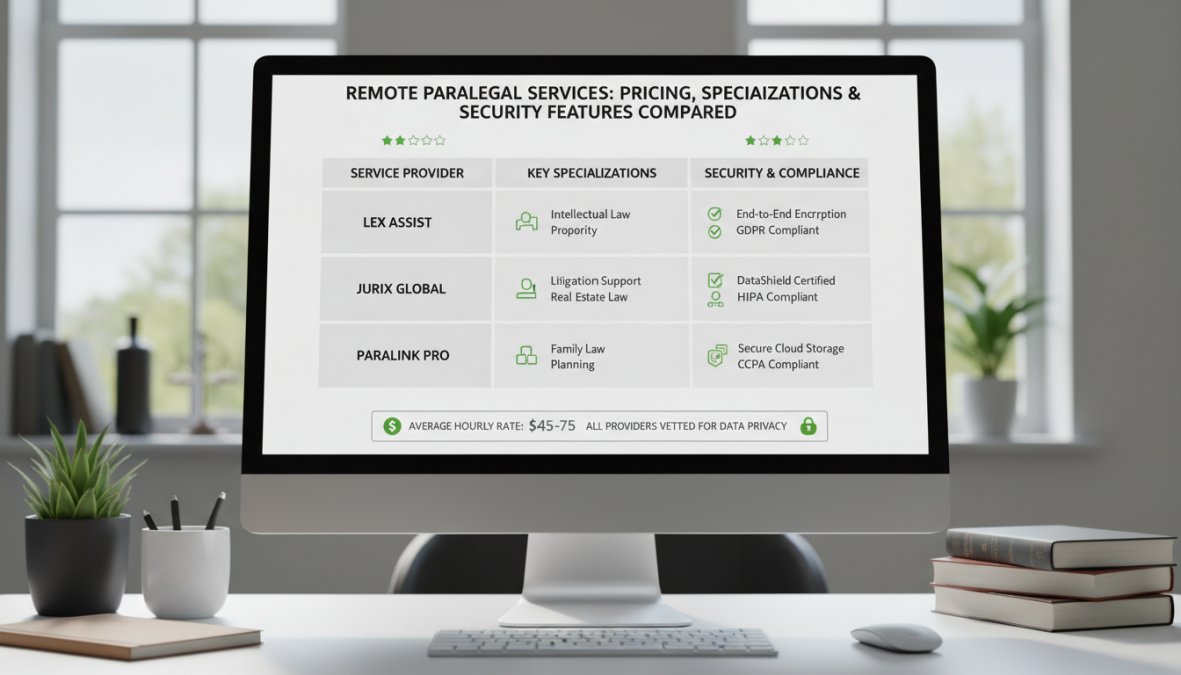
Remote Legal Staff costs vary significantly based on the engagement model. Here’s how the three primary structures compare:
Hourly rate model: Remote paralegals in the U.S. typically bill between $25-65/hour depending on experience and specialization. Remote legal assistants range from $18-40/hour. This model works well for project-based or fluctuating workloads.
Flat rate/monthly retainer: Many remote legal staffing firms offer dedicated staff on a monthly retainer, typically ranging from $2,500-6,000/month for full-time equivalent support. This provides predictable costs and consistent availability.
Offshore model: Offshore remote legal staff, often based in the Philippines, Latin America, or South Asia, can reduce costs by 40-60% compared to U.S.-based remote staff (legal staffing industry benchmarks, 2025). Quality varies significantly by provider. The risk is in communication gaps and jurisdictional unfamiliarity with U.S. legal procedures.
Comparison Table: In-House vs. Remote Legal Staffing Costs
| Cost Category | In-House (Major Metro) | U.S.-Based Remote | Offshore Remote |
|---|---|---|---|
| Base Salary/Rate | $55,000-$85,000/yr | $30,000-$60,000/yr | $12,000-$25,000/yr |
| Benefits & Payroll Taxes | +25-35% of salary | Minimal or none | Minimal or none |
| Office Space & Equipment | $8,000-$15,000/yr | $0 | $0 |
| Recruitment Costs | $3,000-$8,000 | $0-$2,000 (via agency) | $0-$1,500 |
| Training & Onboarding | $2,000-$5,000 | $1,000-$3,000 | $1,500-$4,000 |
| Estimated Annual Total | $75,000-$130,000 | $35,000-$70,000 | $15,000-$32,000 |
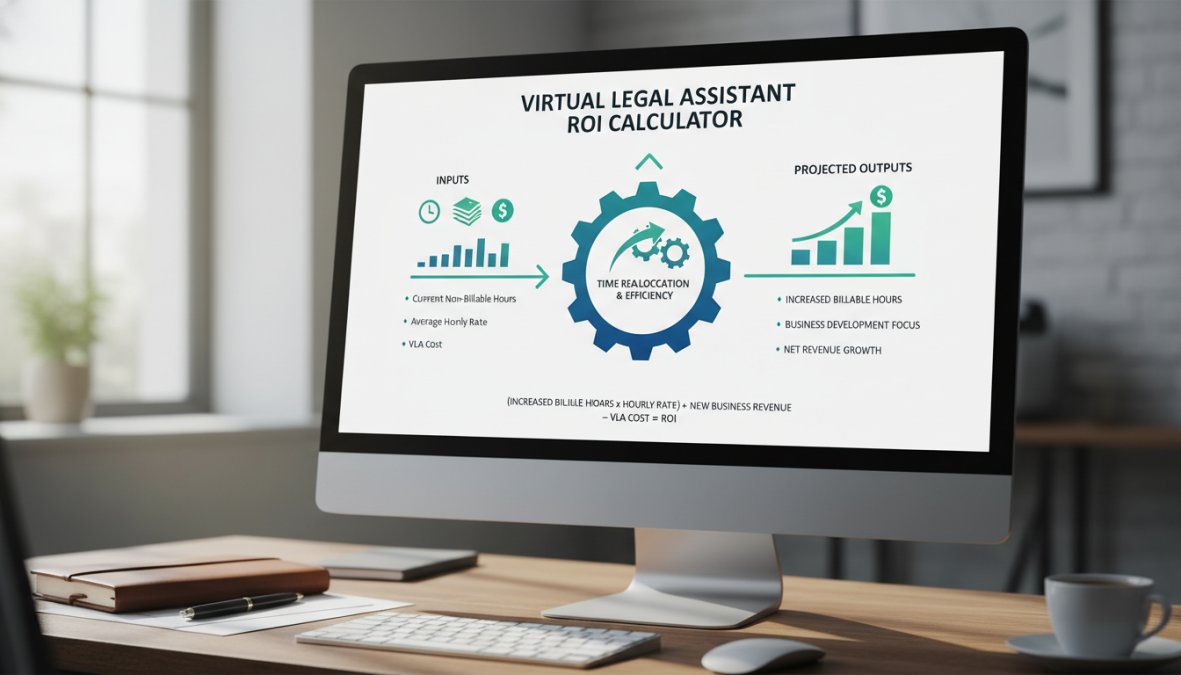
An enterprise client in San Francisco hired 20 virtual staff and generated $7.5M in annualized revenue while achieving $1.5M in annual cost savings. That’s the scale argument for remote legal staffing made concrete.
The offshore model carries real compliance risk if your remote staff accesses client data across international borders. Before engaging any offshore remote legal staffing provider, verify their data security protocols, confirm they operate under a Business Associate Agreement or equivalent, and check whether your state bar ethics rules impose restrictions on offshore outsourcing.
Security, Compliance, and Data Protection Considerations
Data protection is the most underestimated risk in remote legal staffing. Most firms focus on cost and capability during hiring. Security gets addressed after an incident.
Remote legal staff access client files, case management systems, and confidential communications. The obligations that govern in-house staff, including attorney-client privilege, Rule 1.6 confidentiality requirements, and applicable data protection regulations, apply equally to remote staff. The difference is that remote access introduces additional attack surfaces.
Minimum security requirements for any remote legal staff engagement:
- Encrypted communication tools. Email should be encrypted in transit. Client communications should not occur over personal email accounts.
- VPN or zero-trust network access. Remote staff accessing firm systems should do so through a firm-controlled VPN or equivalent secure access solution.
- Multi-factor authentication (MFA). All practice management software accounts, including Clio, MyCase, and similar platforms, should require MFA.
- Documented confidentiality agreements. Every remote staff member should sign a confidentiality and data protection agreement before accessing any client matter.
- Device management policies. Establish whether remote staff use firm-provided devices or personal devices, and implement endpoint security policies accordingly.
According to the ABA Legal Technology Survey 2024, 89% of law firms now use cloud-based practice management software. Cloud platforms generally provide stronger security than local servers, but they require proper access controls to be effective. The security risk isn’t the cloud. It’s weak access management.
Integrating Remote Staff with Legal Software and Case Management Tools
The operational success of remote legal staff depends almost entirely on how well they’re integrated into the firm’s existing tech stack. This is the part most onboarding guides skip.
The standard legal technology environment in 2026 includes a practice management platform (Clio, MyCase, Filevine, or similar), a document management system, a billing and time-tracking tool, and a communication platform. Remote staff need access to all of these, with appropriate permission levels, before they can be productive.
Practical integration steps:
- Create role-based access in your practice management platform. Remote paralegals typically need full matter access. Remote legal assistants may need read access to case files but restricted access to billing records.
- Set up a shared task management system. Tools like Asana or ClickUp, integrated with Clio through available connectors, allow attorneys to assign tasks to remote staff with deadlines and priority levels.
- Establish a document naming and filing convention. Remote staff can’t walk down the hall to ask where a document goes. Clear naming conventions eliminate ambiguity and reduce errors.
- Configure communication channels. Designate which platform handles internal team communication (Slack, Teams), which handles client communication, and establish response time expectations for each.
- Run a structured onboarding period. The first two weeks should include shadowing existing workflows, reviewing firm-specific templates, and completing any required security training.
The 2025 Clio Legal Trends Report found that 79% of legal professionals now use AI in their firms, and 82% expect their AI usage to increase over the next 12 months. Remote legal staff who are proficient with AI-assisted legal research and document drafting tools add compounding value over time.
How to Manage Remote Legal Staff Effectively
Managing remote legal staff requires different habits than managing in-office staff. The biggest mistake is applying in-office management patterns to remote teams and then blaming the remote model when it fails.
The management framework that works:
Set output expectations, not activity expectations. Remote staff should be evaluated on completed tasks, accuracy, and turnaround time, not hours logged or online status. Attorneys who micromanage remote staff through activity tracking create resentment and reduce the quality of work.
Establish a weekly synchronous touchpoint. A 30-minute weekly check-in per remote staff member maintains alignment, surfaces blockers early, and preserves the working relationship. Daily check-ins are usually excessive and signal distrust.
Build a feedback loop into the workflow. Remote staff can’t observe attorney reactions in real time. Structured feedback, delivered within 24-48 hours of a completed task, accelerates skill development faster than periodic performance reviews.
Document everything. Remote teams run on documentation. Firm procedures, matter-specific instructions, and client preferences should all be written down and accessible in a shared system. Verbal instructions that aren’t documented get lost.
A common mistake is treating the onboarding period as a formality. Remote staff who aren’t properly onboarded to firm systems, culture, and expectations within the first 30 days typically underperform for months afterward. Front-load the investment.
Assign a dedicated point-of-contact attorney for each remote staff member during the first 90 days. This single relationship reduces confusion, accelerates onboarding, and produces better work quality than distributing a new remote hire across multiple attorneys simultaneously.
Common Mistakes Law Firms Make When Hiring Remote Legal Staff
Most remote legal staffing failures are predictable. The same mistakes appear across firm sizes and practice areas.
Hiring on cost alone. The cheapest remote legal staff option is rarely the most cost-effective. A remote paralegal who requires constant supervision, produces error-prone work, or communicates poorly with clients creates attorney time costs that dwarf the salary savings.
Skipping the security review. Firms that onboard remote staff without establishing data protection protocols are creating liability exposure. The question isn’t whether a breach is possible. It’s whether the firm has documented reasonable precautions.
Failing to define the role clearly. Remote legal assistants who don’t know whether they’re expected to draft documents, handle client calls, or manage billing will default to whatever they’re most comfortable with, which may not align with the firm’s needs. Write the job description before you post it, not after.
Ignoring time zone and availability fit. A remote paralegal in a significantly different time zone can create coordination friction that slows down case work. Establish working hours overlap expectations before hiring.
Not using legal-specific software from day one. Remote staff who learn the firm’s workflow through email and shared drives, then have to migrate to Clio or MyCase later, lose weeks of productivity in the transition. Start them on the actual systems from day one.
According to the Paragon Legal 2026 Survey, 55% of remote and hybrid legal professionals would start job hunting if required to return to the office three to five days per week. Retention of good remote legal staff depends on maintaining the flexibility that attracted them in the first place.
The remote legal staff hiring checklist:
- Job description written with specific task expectations and required software proficiency
- Confidentiality and data protection agreement prepared
- Practice management platform access configured with appropriate role permissions
- MFA enabled on all firm software accounts
- Onboarding schedule covering first 30 days documented
- Point-of-contact attorney assigned
- Weekly check-in cadence established
- Output metrics and feedback process defined
Conclusion
Scaling a law firm without ballooning overhead requires a deliberate approach to legal support staffing. The data is clear: remote legal staffing delivers cost savings, capacity expansion, and talent access that in-house models can’t match at equivalent cost. The firms that execute it well treat it as an operational system, not a hiring shortcut.
The challenge most firms face isn’t finding remote legal staff. It’s finding staff with the legal acumen to work independently without constant attorney supervision. Bar Passed Attorneys -Remote Paralegals addresses this directly by providing bar-passed attorneys as dedicated virtual paralegals, trained by a U.S. attorney who understands law firm operations from the inside. Every placement brings attorney-level legal thinking to paralegal-level tasks, reducing the supervision burden and improving the quality of work product. Get started with Bar Passed Attorneys -Remote Paralegals and put attorney-level paralegal support to work in your firm.
Frequently Asked Questions
What types of remote legal staff can I hire?
Law firms can hire several types of remote legal staff, including remote paralegals, remote legal assistants, legal virtual assistants, legal secretaries, and specialized roles like legal nurse consultants. Some providers, like Bar Passed Attorneys, offer bar-passed attorneys working as dedicated virtual paralegals, a premium tier that brings attorney-level legal acumen to paralegal support tasks such as legal research, drafting, and case management.
What are the benefits of hiring remote legal staff?
The benefits of remote legal staff include significant cost savings of 40-70% compared to traditional in-house hiring, access to a wider talent pool, reduced overhead, and improved scalability. According to a Paragon Legal survey, 47% of in-office legal workers reported burnout versus only 27% of remote workers. Firms that embrace remote staffing also report faster case throughput and improved client satisfaction, as staff can focus more on billable hours and less on administrative overhead.
How much does remote legal staff cost?
The cost of remote legal staff varies by model and location. Domestic remote paralegals typically earn a median annual wage of $60,970 (BLS, 2024), while offshore or virtual staffing models can reduce labor costs by 40-70% compared to metro market in-house hiring. Firms may pay hourly rates, flat monthly retainers, or per-project fees depending on the provider. Bar-passed attorney paralegals command a premium but deliver measurably higher output quality and reduced attorney review time.
What qualifications should remote legal staff have?
Remote legal staff qualifications depend on the role. Remote paralegals should have formal paralegal training or a related degree, familiarity with legal software like Clio or MyCase, and strong written communication skills. For higher-level support, firms increasingly prefer candidates with bar passage or law degrees. Key soft skills include self-discipline, attention to detail, and the ability to manage tasks independently. Always verify credentials, request work samples, and confirm experience with your practice area before hiring.
Is hiring remote legal staff secure and compliant?
Yes, when proper protocols are in place. Firms should require remote legal staff to use encrypted communication tools, VPNs, and cloud-based practice management software with role-based access controls. Contracts should include confidentiality clauses and data protection agreements aligned with applicable bar rules on client confidentiality. With 89% of law firms now using cloud-based practice management software (ABA, 2024), the infrastructure for secure remote work is well established across the legal industry.
What tasks can remote legal staff handle?
Remote legal staff can handle a broad range of tasks including legal research, document drafting, client intake, case management, scheduling, billing support, discovery preparation, and administrative tasks. Higher-skilled remote staff, such as bar-passed attorney paralegals, can also draft motions, prepare demand letters, and conduct substantive legal analysis. Delegating these tasks to remote legal staff frees attorneys to focus on high-value billable work and firm growth strategy.