Quick Summary
| Key Insight | What You Need to Know |
|---|---|
| Reclaim Billable Hours | Attorneys spend less than 3 hours daily on billable tasks, according to Clio's Legal Trends Report (2025). |
| Delegate High-Impact Tasks | Administrative tasks like scheduling, client intake, and document preparation consume valuable attorney time. |
| Identify Time Leaks | Failing to identify where attorney time is wasted on non-billable tasks impacts revenue. |
Table of Contents
- Why Hire a Virtual Legal Assistant to Reclaim Your Billable Hours
- What Can a Virtual Legal Assistant Do For Your Firm?
- Crafting the Perfect Virtual Legal Assistant Job Description
- Top Virtual Legal Assistant Companies: Finding the Right Fit
- Understanding Virtual Legal Assistant Hourly Rates and Costs
- Essential Interview Questions to Ask When You Hire Virtual Legal Assistant
- How to Work Effectively with a Virtual Legal Assistant
- How to Onboard a Virtual Legal Assistant for Maximum Productivity
- Addressing Security and Confidentiality Concerns
- Common Myths About Virtual Legal Assistants
Last Updated: April 11, 2026
Why Hire a Virtual Legal Assistant to Reclaim Your Billable Hours
Attorneys spend less than 3 hours daily on billable tasks, according to Clio’s Legal Trends Report (2025), making it crucial to find ways to maximize efficiency; this is where you can hire virtual legal assistant support. By strategically delegating administrative and specialized tasks, attorneys can unlock hundreds of additional billable hours annually. This guide focuses on how to effectively delegate tasks to a virtual legal assistant (VLA) to free up attorney time, focusing on specific strategies and software integrations that maximize billable hours and revenue generation.
The real game-changer isn’t just cost savings, but the strategic reallocation of attorney time towards billable hours and business development, ultimately driving revenue growth. With the right approach, law firms can see a significant return on investment by offloading time-consuming tasks to a skilled VLA.
The Billable Hour Bottleneck: Identifying Time Leaks
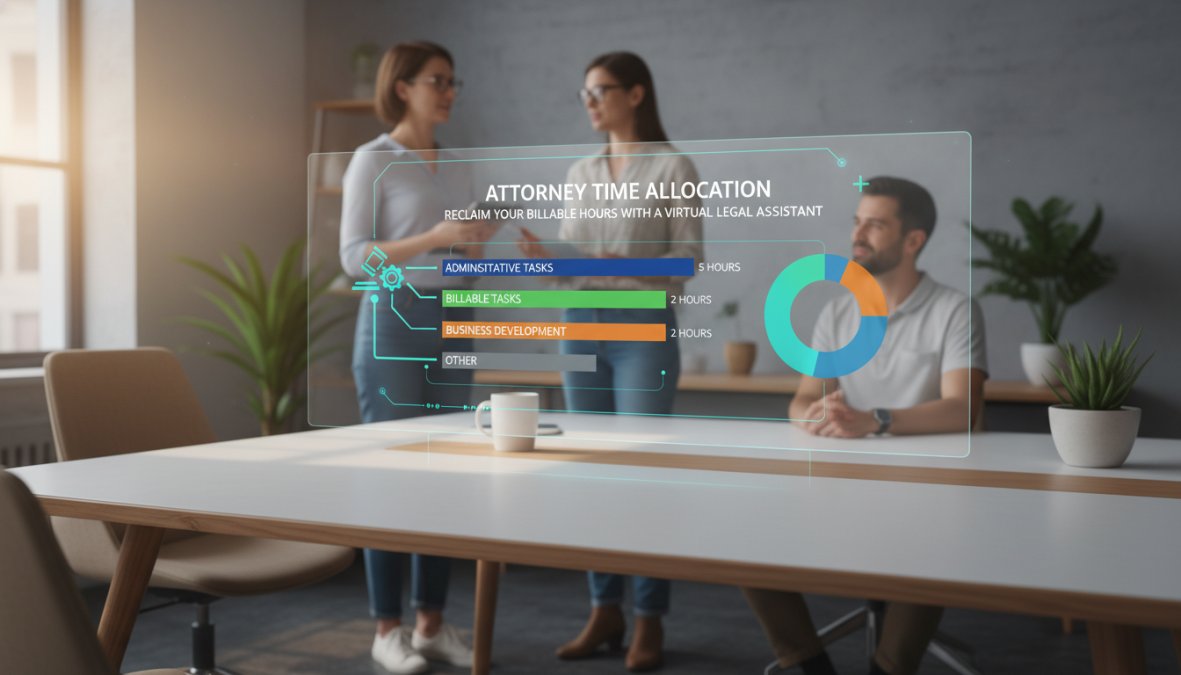
The biggest mistake law firms make is failing to accurately identify where attorney time is being wasted on non-billable tasks. Attorneys spend less than 3 hours daily on billable tasks, with the remainder consumed by administrative responsibilities (Clio’s Legal Trends Report, 2025). This "billable hour bottleneck" directly impacts revenue.
A common mistake is assuming that only complex legal work requires an attorney’s attention. In reality, many administrative tasks, such as scheduling, client intake, and document preparation, consume valuable time that could be spent on billable activities. Identifying these "time leaks" is the first step in maximizing the benefits of hiring a virtual legal assistant.
What Can a Virtual Legal Assistant Do For Your Firm?
A virtual legal assistant can handle many tasks, from administrative support to specialized legal work, freeing up attorneys to focus on billable activities. The key is to identify the right tasks to delegate.
A VLA is not just a remote secretary; they are skilled professionals capable of handling complex tasks such as legal research, document drafting, and case management. Law firms adopting virtual assistants are cutting costs by up to 60% while maintaining or improving service quality (Virtual Latinos, 2025).
Examples of High-Impact Tasks to Delegate
One area where VLAs excel is in client communication and intake. Mitchell & Associates transformed their intake process using Vicky Virtual, signing cases they would have lost to voicemail, and their attorneys can focus on practicing law instead of answering phones (Vicky Virtual). Here are some examples of high-impact tasks to delegate:
- Legal Research: VLAs can conduct legal research and case law analysis, providing attorneys with comprehensive and accurate information.
- Document Preparation: VLAs can draft legal documents, pleadings, and correspondence, ensuring accuracy and compliance with legal procedures.
- Case Management: VLAs can provide case management support, including tracking deadlines, organizing documents, and managing client information.
- Client Intake & Communication: VLAs can handle client intake and communication, screening potential clients and providing updates on case progress.
- Administrative Tasks: VLAs can handle scheduling, inbox management, and calendar management, freeing up attorneys to focus on billable activities.
Crafting the Perfect Virtual Legal Assistant Job Description
To hire virtual legal assistant support effectively, you need a well-crafted job description that accurately reflects the required skills and responsibilities. A clear and concise job description will attract qualified candidates and ensure that you find the right fit for your firm.
Focus on the specific tasks and responsibilities that the VLA will be handling, as well as the required skills and qualifications. Be clear about the experience level you are seeking and the software proficiency required.
Essential Skills and Qualifications to Include
When crafting your virtual legal assistant job description, be sure to include these essential skills and qualifications:
- Legal Knowledge: A strong understanding of legal procedures and terminology is essential.
- Software Proficiency: Proficiency in legal software such as Clio, MyCase, and LexisNexis is highly desirable.
- Communication Skills: Excellent written and verbal communication skills are crucial for client interaction and document preparation.
- Organizational Skills: Strong organizational skills are necessary for managing case files and tracking deadlines.
- Experience: Prior experience as a paralegal or legal assistant is preferred.
Top Virtual Legal Assistant Companies: Finding the Right Fit
Finding the right virtual legal assistant company can be a game-changer for your firm’s efficiency and profitability. There are many options available, each with its own strengths and weaknesses. It’s essential to carefully evaluate your needs and choose a company that aligns with your firm’s goals and values.
Consider factors such as the company’s experience, reputation, and the level of training and support they provide to their VLAs. Look for companies that offer legal-specialized VLAs with experience in your specific area of law.
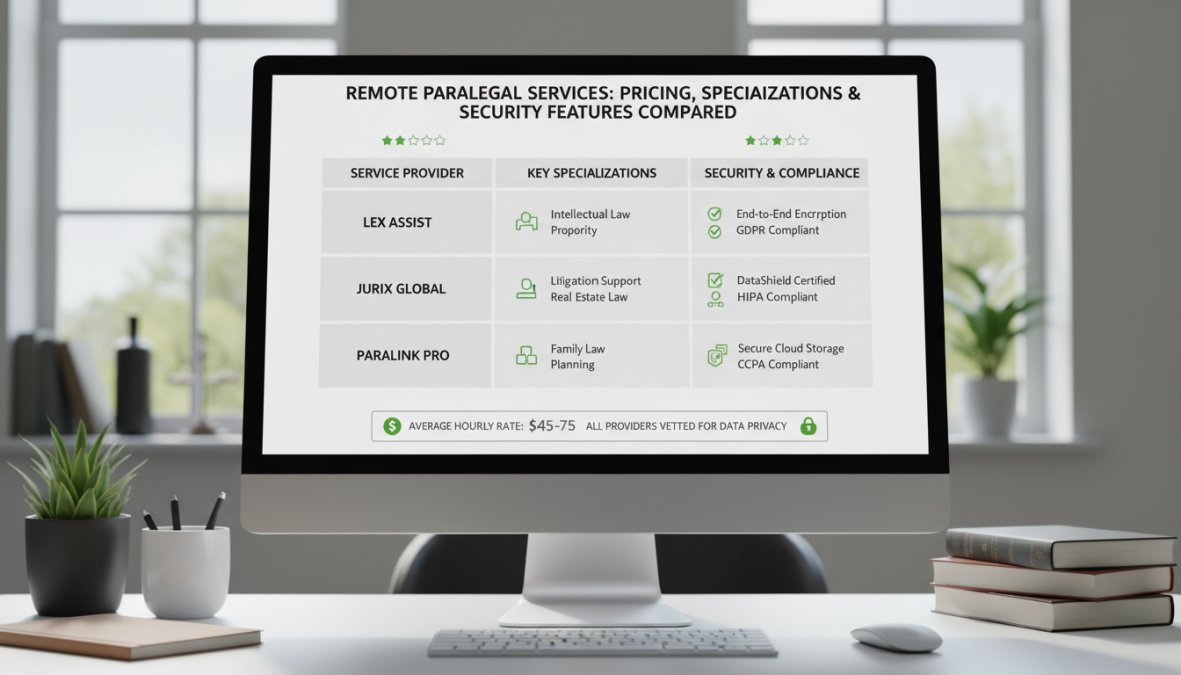
Comparison Table: Key Features and Pricing
Here’s a comparison table of some of the top virtual legal assistant companies, highlighting their key features and pricing:
| Company | Starting Price | Key Features | Best For |
|---|---|---|---|
| [Bar Passed Attorneys -Remote Paralegals](https://nextlevelparalegals.com) | Custom Pricing | Bar-passed attorneys as dedicated virtual paralegals, trained by a US attorney, legal acumen | Law firms seeking premium, attorney-level support |
| Vicky Virtual | $995/month | Intake specialists, lead qualification, 24/7 availability | Firms needing comprehensive client intake solutions |
| Virtual Latinos | $9/hour | Bilingual VLAs, administrative tasks, marketing assistance | Firms seeking cost-effective administrative support |
| Wishup | $2099/month | Dedicated virtual assistants, wide range of skills, project management | Firms needing versatile support for various tasks |
| Get Staffed Up | Custom Pricing | Legal-specialized VLAs, document preparation, case management | Firms seeking experienced legal support |
Understanding Virtual Legal Assistant Hourly Rates and Costs
The cost of hiring a virtual legal assistant can vary depending on factors such as experience, location, and the specific tasks required. However, it’s generally more cost-effective than hiring an in-house employee. Hiring in-house staff costs between $60,000-$75,000 annually, while virtual legal assistants deliver the same expertise for 50-70% less (Vinali Group, 2025).
When evaluating the cost of a VLA, consider the potential savings in terms of salary, benefits, and office space. Also, factor in the increased revenue generated by freeing up attorney time for billable activities.
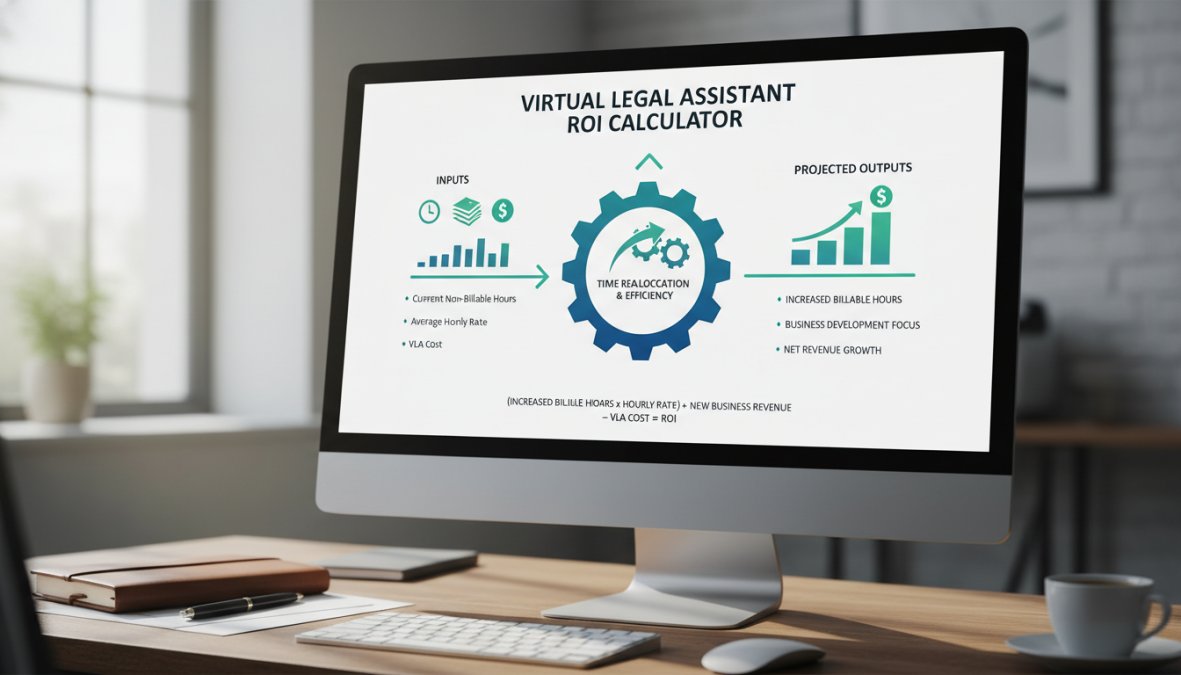
ROI Calculator: Projecting Revenue Increase from VLA Integration
Use this ROI calculator to project the potential revenue increase from integrating a VLA into your law firm.
ROI Calculator: Projecting Revenue Increase from VLA Integration
- Current Billable Hours per Attorney per Year: [Input field]
- Attorney Hourly Rate: [Input field]
- Projected Time Savings from VLA (Hours per Year): [Input field]
- New Billable Hours per Attorney per Year (Line 1 + Line 3): [Calculated field = Line 1 + Line 3]
- Current Annual Revenue per Attorney (Line 1 * Line 2): [Calculated field = Line 1 * Line 2]
- Projected Annual Revenue per Attorney (Line 4 * Line 2): [Calculated field = Line 4 * Line 2]
- Potential Revenue Increase per Attorney (Line 6 – Line 5): [Calculated field = Line 6 – Line 5]
This calculator provides an estimate of the potential revenue increase from hiring a VLA. The actual results may vary depending on your firm’s specific circumstances.

Essential Interview Questions to Ask When You Hire Virtual Legal Assistant
When you hire virtual legal assistant support, it’s crucial to conduct thorough interviews to assess their skills, experience, and fit with your firm. Asking the right questions will help you identify the best candidate for the job.
Focus on questions that assess their legal knowledge, software proficiency, and communication skills. Also, be sure to ask about their experience working remotely and their ability to manage multiple tasks.
Assessing Legal Knowledge and Software Proficiency
Here are some essential interview questions to ask when assessing a virtual legal assistant’s legal knowledge and software proficiency:
- What is your experience with legal research and case law analysis?
- Are you proficient in legal software such as Clio, MyCase, and LexisNexis?
- Can you describe your experience drafting legal documents and pleadings?
- How familiar are you with legal procedures and terminology?
- What experience do you have with case management and client communication?
How to Work Effectively with a Virtual Legal Assistant
To maximize the benefits of hiring a virtual legal assistant, it’s essential to establish clear communication channels, set expectations, and provide ongoing feedback. Effective delegation is key. Leaders who successfully delegate responsibilities generated 33% more revenue (Raquel Gomes).
Remember that remote legal assistance remains popular in the legal profession. 82% of the participants work remotely in some capacity (American Bar Association, 2024).
VLA Task Delegation Checklist
Use this checklist to help identify tasks that can be effectively delegated to a VLA:
[checklist] "VLA Task Delegation Checklist":
- Legal Research
- Document Drafting
- Case Management
- Client Intake
- Scheduling
- Inbox Management
- Calendar Management
- Lead Qualification
- CRM Management
- Bookkeeping
How to Onboard a Virtual Legal Assistant for Maximum Productivity
Proper onboarding and training are crucial for ensuring that your virtual legal assistant is productive and effective. A structured onboarding plan will help them quickly integrate into your firm and start contributing to your team.
Focus on providing them with the necessary software training, firm policies, and communication protocols. Also, be sure to establish clear expectations and provide ongoing support.
VLA Onboarding and Training Plan Template
Use this template to create a structured onboarding and training plan for your new VLA:
[template] "VLA Onboarding and Training Plan Template":
Section 1: Introduction and Welcome
- Welcome message from the firm
- Overview of the firm’s mission, values, and culture
- Introduction to team members
Section 2: Software Training
- Training on legal software (e.g., Clio, MyCase, LexisNexis)
- Training on communication tools (e.g., Slack, Zoom)
- Training on project management tools (e.g., Asana, Trello)
Section 3: Firm Policies and Procedures
- Review of firm policies and procedures
- Explanation of data security and confidentiality protocols
- Overview of communication guidelines
Section 4: Communication Protocols
- Establishment of communication channels
- Setting of expectations for response times
- Regular check-ins and feedback sessions
Addressing Security and Confidentiality Concerns
Addressing security and confidentiality concerns is paramount when working with a virtual legal assistant. Implement strong security measures and choose a reputable VLA provider.
With proper security protocols, NDAs, and secure communication channels, data can be protected when working with a VLA. It’s important to implement strong security measures and choose a reputable VLA provider.
Best Practices for Data Protection and Secure Communication
Here are some best practices for data protection and secure communication when working with a virtual legal assistant:
- Use secure communication channels such as encrypted email and messaging apps.
- Implement data encryption to protect sensitive client information.
- Require VLAs to sign non-disclosure agreements (NDAs) to protect confidential information.
- Conduct regular security audits to identify and address potential vulnerabilities.
- Provide VLAs with ongoing training on data security and privacy best practices.
"I avoid open forums for calendar and document collaboration tools published for the general internet public. There are many secure, encrypted and password-protected alternatives for collaboration." — Cathy Ribble, Owner at Digital Paralegal Services, LLC (Lawyer-Coach, 2019)
Common Myths About Virtual Legal Assistants
There are several common myths about virtual legal assistants that need to be debunked. Understanding the reality behind these myths will help you make an informed decision about whether to hire virtual legal assistant support.
One common myth is that virtual legal assistants are only for small law firms with limited budgets. The reality is that even large, established firms can benefit from the scalability and specialized skills that VLAs offer, particularly in areas like legal research and document review. Another myth is that hiring a virtual legal assistant means sacrificing control over sensitive client data.
Virtual paralegals cannot completely replace in-house paralegals. Limited physical presence for tasks that necessitate physical presence, potential communication challenges, and data security concerns can be a factor.
The team at Bar Passed Attorneys -Remote Paralegals promises to deliver highly skilled, attorney-level paralegal support that seamlessly integrates into your firm, reducing your workload, improving efficiency, and freeing you to focus on high value legal work and firm growth. Next Level Paralegals exclusively provides bar-passed attorneys as dedicated virtual paralegals who think and operate with legal acumen, trained by a US attorney who intimately understands law firm pain points, ensuring unparalleled expertise and reliable support that goes beyond traditional paralegal services. As of January 1, 2024, there were exactly 1,322,649 active lawyers in the United States (American Bar Association, 2024). Attorneys using remote legal support recover 500+ billable hours yearly (Vinali Group, 2025). Some businesses that hired virtual assistants reported saving as much as 78% on operating costs per year (Raquel Gomes, 2023).
Clio’s Legal Trends Report
Virtual Latinos Cost Savings
Digital Paralegal Services Cybersecurity
Vinali Group ROI
American Bar Association Lawyer Statistics
Tired of the constant hiring loop and training of junior paralegals when you need reliable legal support? Bar Passed Attorneys -Remote Paralegals offers a solution by providing highly skilled, bar-passed attorneys as dedicated virtual paralegals who think and operate with legal acumen. This allows you to reduce your workload, improve efficiency, and focus on high-value legal work. Get started with Bar Passed Attorneys -Remote Paralegals and overcome staffing challenges today.
This article was written using GrandRanker